
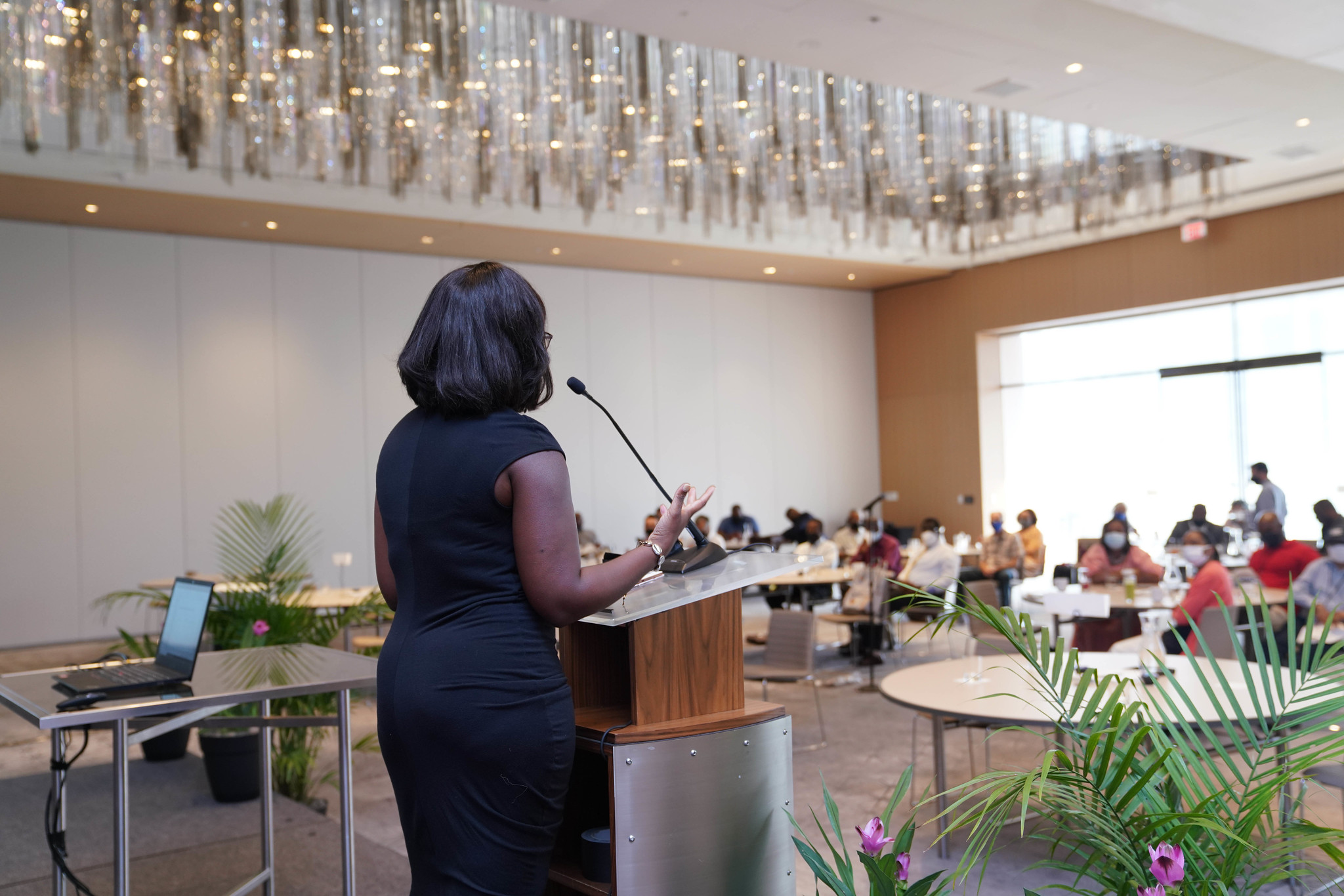
Our faculty members and affiliates are integral to our mission of studying the causes and consequences of inequality and developing remedies for these disparities and their adverse effects.
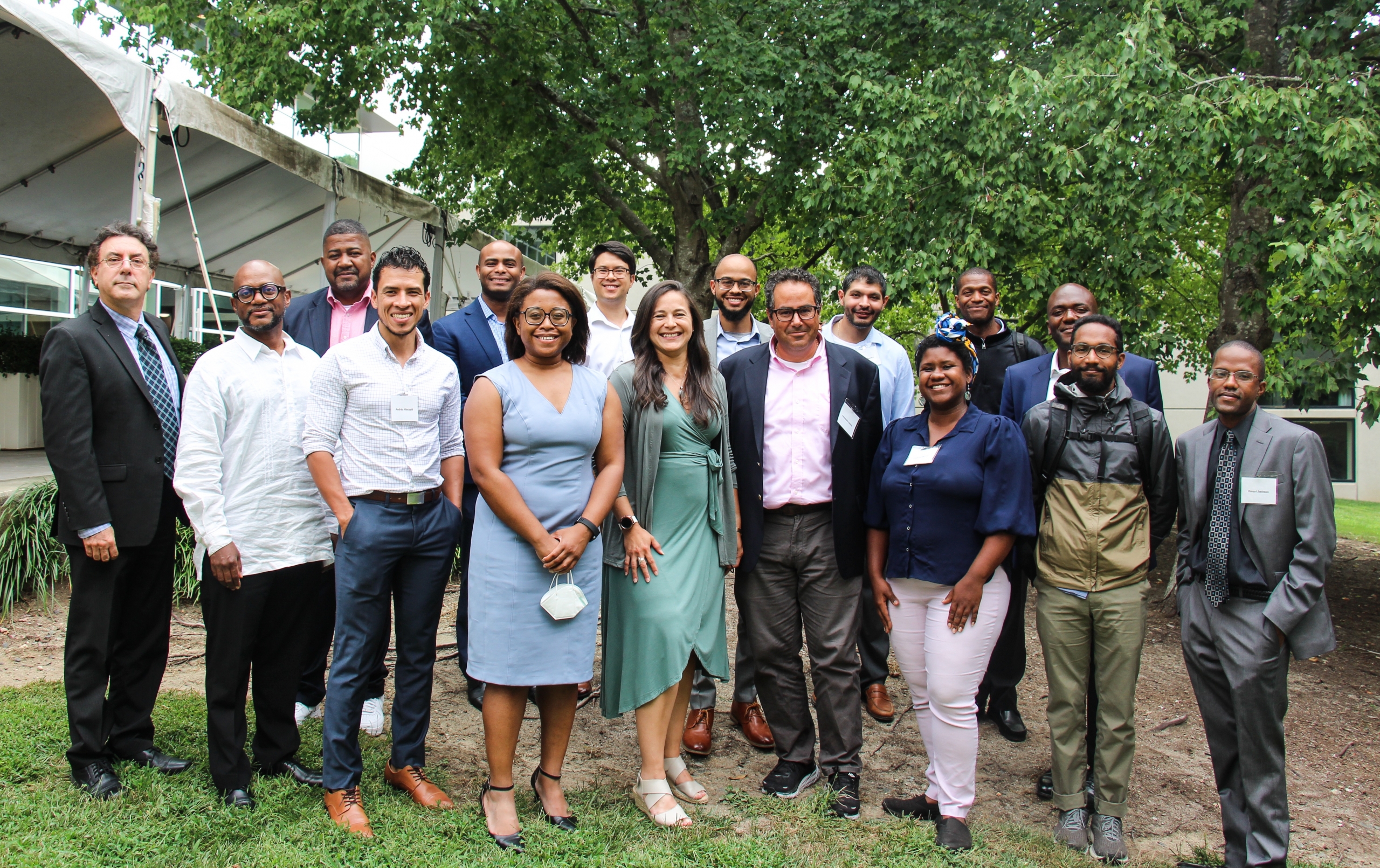
Diversity Initiative for Tenure in Economics (DITE)
The Diversity Initiative for Tenure in Economics (DITE) is a dedicated program aiming to enhance diversity within the realm of economics.
Through this initiative, we support and uplift scholars from diverse backgrounds, fostering an inclusive academic community.
Faculty Affiliates
Our faculty affiliates engage in equity-related research initiatives and actively contribute to projects within the Cook Center’s research themes.
Kristen Cooksey Stowers
Dr. Kristen Cooksey Stowers is an Assistant Professor in the Department of Allied Health Sciences at the University of Connecticut, a fellow with the UConn Health Disparities and Sustainable Global Cities Institutes, and Rudd Center for Food Policy and Obesity resident faculty affiliate. She has a strong interdisciplinary background in health equity, agricultural economics, public policy, and medical sociology. Her program of research focuses on reducing inequities in diet-related health outcomes by improving macro- and micro-level food environments through sustainable policy solutions.
She conducts community-engaged and mixed methods research to examine: (a) the impact of food swamp environments on racial, geographic and socioeconomic disparities in diet-related health outcomes; (b) the potential of inclusive public policy processes (e.g., zoning) to prevent disparities in diet-related health status regardless of racial/ethnic minority and citizenship status; and (c) the influence of micro-level food environments (e.g., food pantries, family child care homes) on health risks in food-insecure populations, communities of color, and other historically marginalized groups.
Dr. Cooksey Stowers’ research has been funded by NIH (i.e., NIA, NHLBI), the USDA, the Food Trust Center for Healthy Food Access, the Robert Wood Johnson Foundation, and the Reinvestment Fund. Her leadership experience includes service with the W.K. Kellogg Foundation and an appointment as a Public Service Leader Scholar with the USDA in Washington, D.C. Since coming to Connecticut in 2016, she has worked with community partners and residents aiming to improve grocery store access in the North Hartford Promise Zone. She also serves as a board member of the Connecticut Food Bank advising on their Hunger to Health initiative with health care organizations throughout the state. She mentors both undergraduate and graduate students.
Kunfeng Pan
Kunfeng Pan is an Associate Professor in the School of Education at Renmin University of China. His recent research focuses on poverty alleviation and education inequality with a focus on the role of higher education institutions in promoting rural development in poverty-stricken areas and bridging social inequalities. He has also focused on the inequality in parenting worldwide, and the enhancing family wellbeing policy. He serves as a consultant expert in the planning department at the ministry of education of China. He has his Ph. D in Economics of Education from Peking University and a B.S. in Physics from Peking University. He was a visiting professor at Cook Center at Duke University for the 2019-2020 academic year and taught a Duke Immerse course named China and Higher Education Access. He has also been a visiting professor at the University of Cambridge in the UK, and Hokkaido University in Japan.

Lauren Brinkley-Rubinstein
Lauren Brinkley-Rubinstein is an Associate Professor of Population Health Sciences and core faculty in the Samuel Dubois Cook Center. She is a national expert in examining how the criminal legal system impacts people, families, and communities. During the pandemic, she co-founded the COVID Prison Project, one of the only national data projects that tracks and analyzes COVID testing, cases, and deaths in prison systems across the country. She utilized the infrastructure of the COVID Prison Project to recently launch the Third City Project—a Robert Wood Johnson Foundation funded big data project that tracks and aggregates publicly available health and health policy data from carceral systems. Additionally, Dr. Brinkley-Rubinstein is the PI of several NIH and foundation grants focused on substance use, HIV prevention, and mortality. In 2019, she co-edited a special issue of AJPH that explored how mass incarceration is a socio-structural determinant of health and more recently was invited by the National Academy of Medicine to attend its Annual Emerging Leaders Forum. Her work has been featured in the New York Times, the Wall Street Journal, ProPublica, CNN, Science Magazine, and other media outlets. Her work blends research and policy, which has recently culminated in providing expert consultation to congress relevant to prison standards and data reporting.
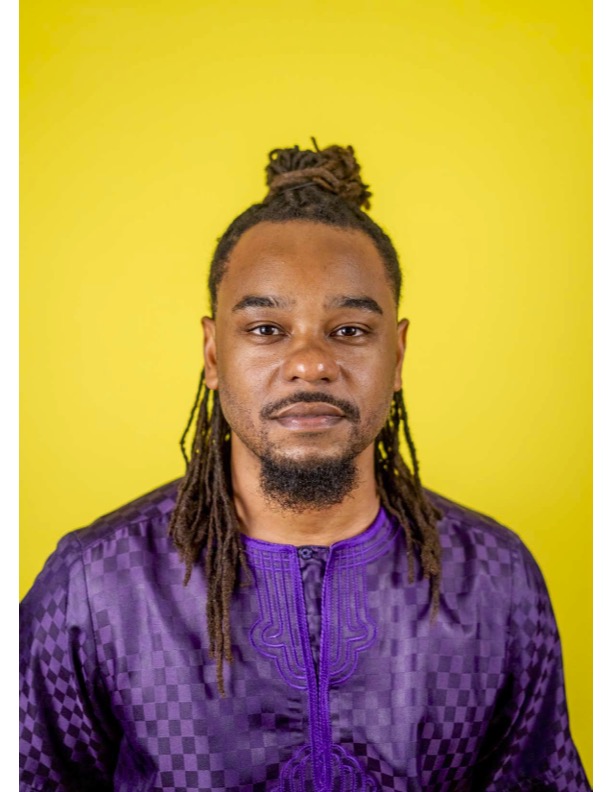
Marcus Anthony Hunter
Dr. Marcus Anthony Hunter is the Chair of the Department of Sociology & Criminology at Howard University. Coiner of #BlackLivesMatter, he is the author and editor of five books, including Radical Reparations: Healing the Soul of a Nation (HarperCollins / Amistad, 2024). Professor Hunter served as the Inaugural Chair of UCLA’s African American Studies Department and President of the Association of Black Sociologists. He has appeared on or in C-SPAN’s BookTV, MSNBC, BBC, NPR, the Sacramento Bee, the Los Angeles Times, the LA Sentinel, Newsweek, USA Today, Black Enterprise, the Daily Beast, ABC News, the Washington Post, and the New York Times.
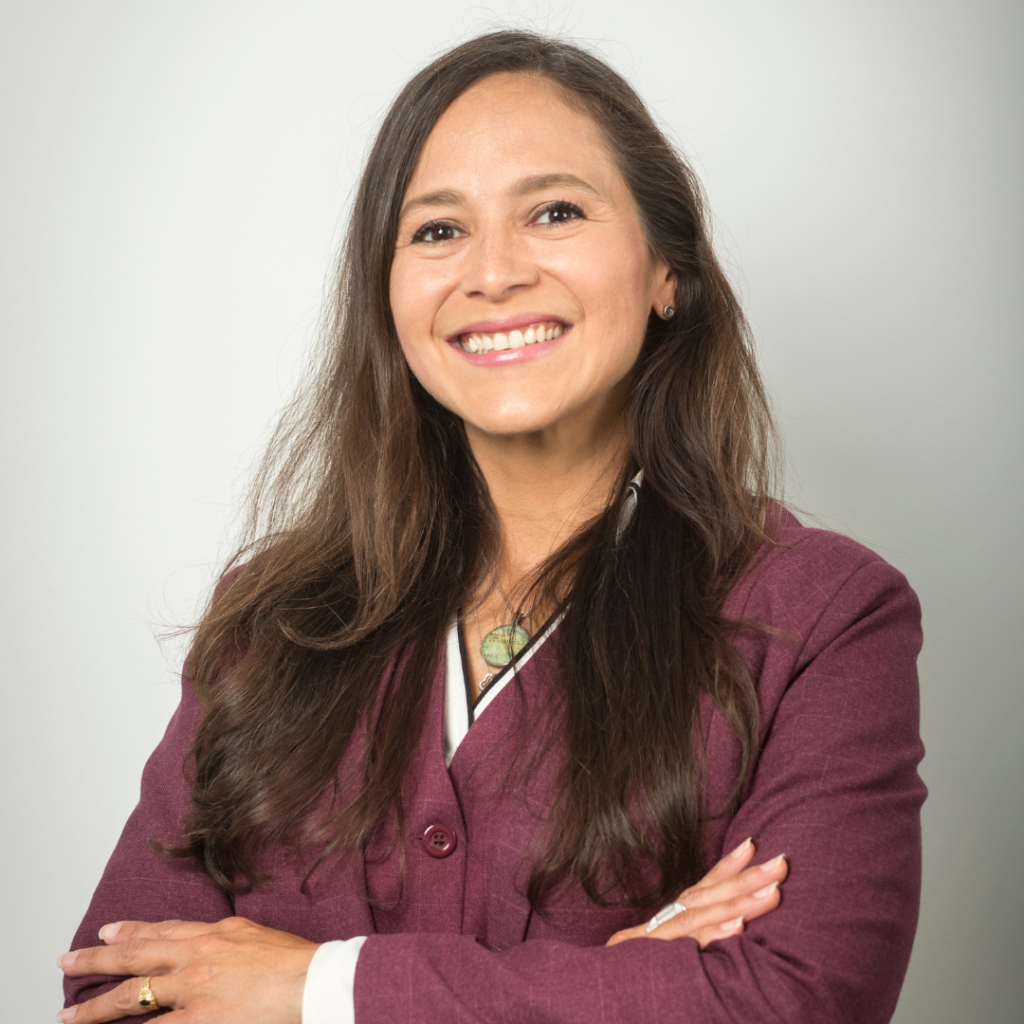
Mónica García-Pérez
Dr. García-Pérez is the Distinguished Professor of Economics at Fayetteville State University in the Department of Management, Marketing, Entrepreneurship, and Fire and Emergency Services at the Broadwell College of Business and Economics. She holds a Ph.D. in Economics from the University of Maryland-College Park and an MSc in Economics from the University College London. Her research concentrates on health economics, immigration, and labor economics. She is also working on wealth inequality across race/ethnicity and the impact of health shocks. Her research also looks at the intergenerational effects of barriers to access to health care and health coverage. She has published her research in journals such as Demography, American Economic Review P&P, The Journal of Economic Education, International Education Planning, Review of Black Political Economy, Journal of Economics, Race, and Policy.
Prof. Garcia-Perez teaches several courses connected to health, labor, and immigration. She teaches Econometrics (undergraduate and graduate), Economics of Immigration, Economics of Health Disparities, Health Economics, and Labor Economics. She also enjoys teaching Principles of Microeconomics and mentoring students in economics. Prof. Garcia-Perez has an active mentor role. She has mentored undergraduate and graduate students in programs like the AEA Summer Program, the AEA Mentoring Program (previously called The Pipeline Mentoring Program), and the PreDoc Mentoring Workshop organized by TAMU and the American Society of Hispanic Economists.
Further, Prof. Garcia-Perez was an influential member in the collaborative process between SCSU and CentraCare System to create the Center for Health Outcome Policy Research (CHOPR). She has written several reports on the St. Cloud residents’ local opinions about immigration, well-being, and childhood obesity. She has also evaluated educational and health programs in the area of St. Cloud. She holds a data clearance to work with U.S. Census Bureau sensitive administrative data. She is the 2020 past-President of the American Society of Hispanic Economists (ASHE), the Director of the Faculty Research Group of Immigrants in Minnesota, a Research Scholar at the Roy Wilkins Center, the Humphrey School of Public Affairs, University of Minnesota, and a Senior Research Associate at The Samuel DuBois Cook Center on Social Equity, Duke University, a selected participant of the Reinventing Our Communities (ROC) Program organized by the Federal Reserve of Philadelphia for Central Minnesota, and a past Co-Director of the SCSU Survey Center. She also serves as a board member of the local non-profit research organization Hispanic Advocacy and Community Empowerment through Research (HACER).

Nancy MacLean
Nancy MacLean is an award-winning scholar of the twentieth-century U.S., whose most recent book, Democracy in Chains: The Deep History of the Radical Right’s Stealth Plan for America, a finalist for the National Book Award in Nonfiction and a New York Times bestseller, won the Los Angeles Times Book Prize in Current Interest, the Lannan Foundation Cultural Freedom Award, and the Lillian Smith Book Award for writing about the South. MacLean is the author of four other books, including Freedom is Not Enough: The Opening of the American Workplace (2006) called by the Chicago Tribune “contemporary history at its best,” and Behind the Mask of Chivalry: The Making of the Second Ku Klux Klan, named a New York Times “noteworthy” book of 1994. Her articles and review essays have appeared in American Quarterly, The Boston Review, Feminist Studies, Gender & History, In These Times, International Labor and Working-Class History, Labor, Labor History, Journal of American History, Journal of Women’s History, Law and History Review, The Nation, The New Republic, the Progressive and many edited collections. Often on the radio, she has also been a frequent guest on such cable shows as Democracy Now! Real Time with Bill Maher, and the ReidOut with Joy Reid. Professor MacLean’s scholarship has received more than a dozen prizes and awards and been supported by fellowships from the American Council of Learned Societies, the National Endowment for the Humanities, the National Humanities Center, the Russell Sage Foundation, PolicyLink, and the Woodrow Wilson National Fellowships Foundation. In 2010, she was elected a fellow of the Society of American Historians, which recognizes literary distinction in the writing of history and biography.
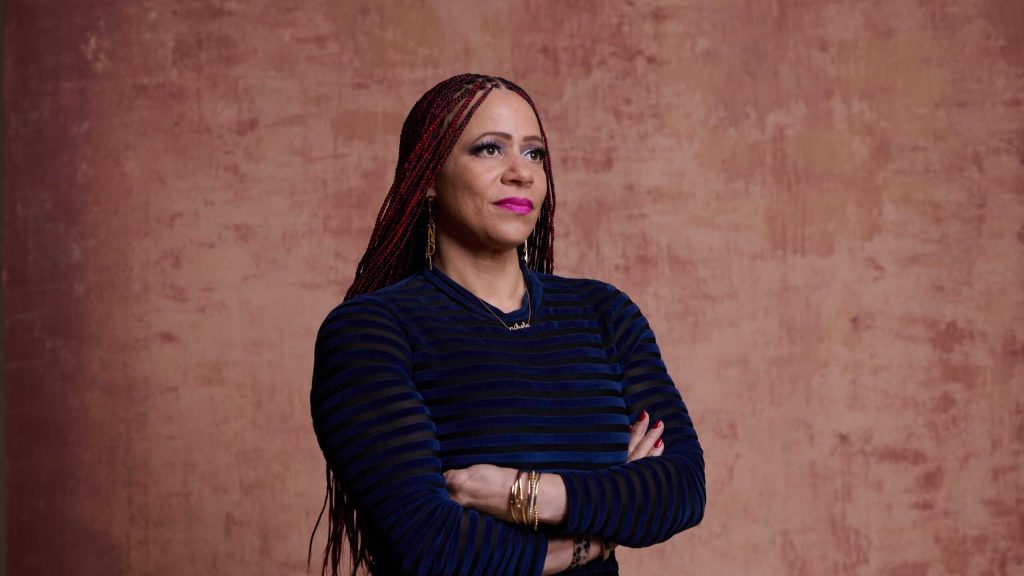
Nikole Hannah-Jones
Nikole Hannah-Jones is the Pulitzer Prize-winning creator of the 1619 Project and a staff writer at The New York Times Magazine. The book version of The 1619 Project as well as the 1619 Project children’s book, Born on the Water, were instant #1 New York Times bestsellers. Her 1619 Project is now a six-part docuseries on Hulu.
Hannah-Jones has spent her career investigating racial inequality and injustice, and her reporting has earned her the MacArthur Fellowship, known as the Genius grant, a Peabody Award, two George Polk Awards and the National Magazine Award three times.
She also serves as the Knight Chair of Race and Journalism at Howard University, where she founded the Center for Journalism & Democracy. Hannah-Jones is also the co-founder of the Ida B. Wells Society for Investigative Reporting, which seeks to increase the number of investigative reporters and editors of color, and in 2022 she opened the 1619 Freedom School, a free, afterschool literacy program in her hometown of Waterloo, Iowa. Hannah-Jones holds a Master of Arts in Mass Communication from the University of North Carolina at Chapel Hill and earned her Bachelor of Arts in History and African-American studies from the University of Notre Dame.
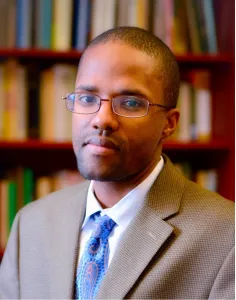
Omari H. Swinton
Omari H. Swinton is a professor in the Economics department at Howard University where he teaches introductory, intermediate, and urban economics. He is currently the Director of Graduate Studies and Chair. Additionally, he serves as Division Chair for the Social Sciences in the College of Arts and Sciences. His research interests include labor economics and education. He has papers examining the teenage labor market, the benefits from attending HBCU’s, and the returns to a college education. He coauthored a report for NAFEO entitled “The State of Blacks in Higher Education.” And has a published a book on HBCUs titled “Vital and Valuable: The Relevance of HBCUs to American Life and Education.” He currently is working on projects that examine the returns to effort for students, the obstacles to faculty diversity in higher education, and benefits of attending an HBCU.
He is the director of the AEA Summer Training Program and Scholarship Program which has increased diversity in the field of economics by preparing talented undergraduates for doctoral programs in economics and related disciplines. He is Vice President of the Board of Directors for the Phi Beta Sigma Federal Credit Union. Dr. Swinton owns a Right at Home Franchise in Baltimore, Maryland that was just recognized for its performance as a President’s Circle Member. He earned his B.S. from Florida A & M University in 2001, and his doctoral degree from Duke University in 2007. He resides in Upper Marlboro, MD with his wife, Phyllis, and four children, Omari Jr., Nyla, Jamir, and Nasir.